
There are few watches that have become as closely associated with exploration as the Rolex Explorer II.
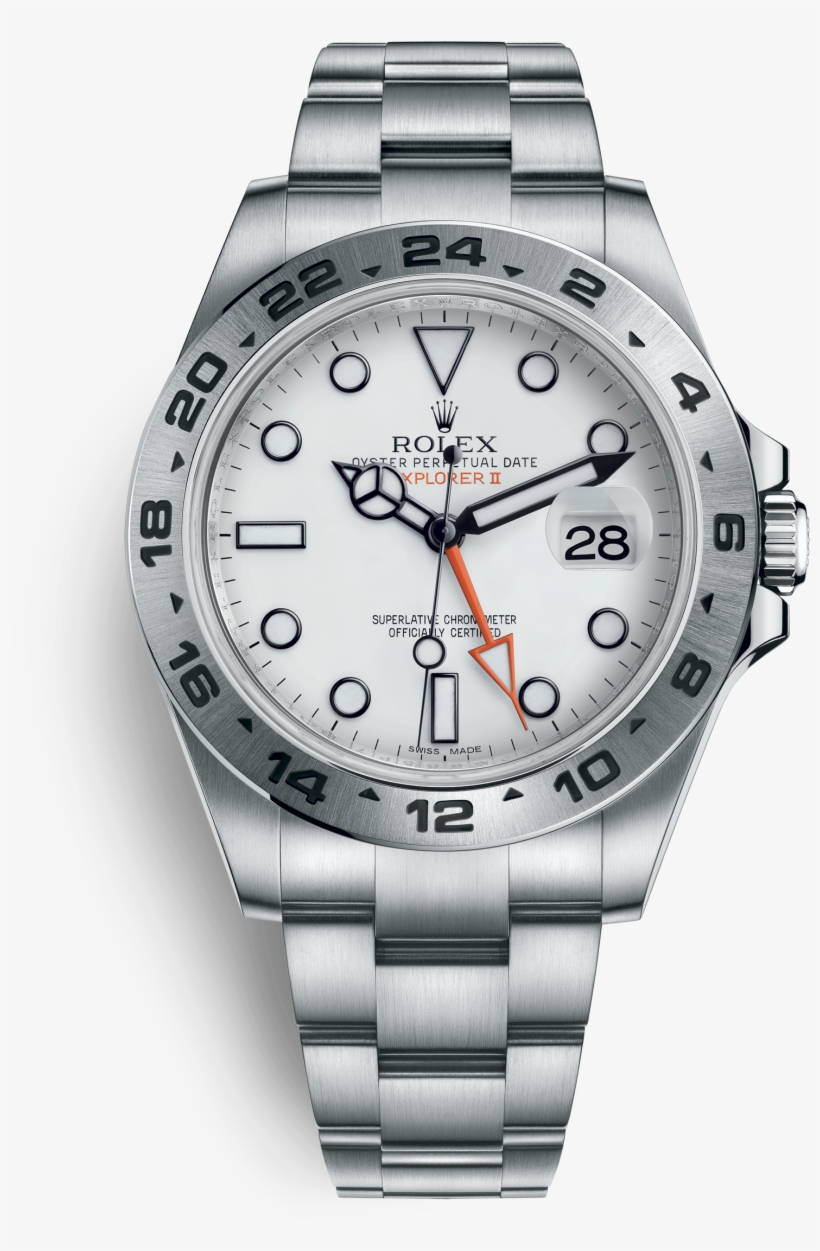
First introduced in 1971 as a watch designed with cave explorers in mind, the Explorer II developed a reputation as one of Rolex's ultimate adventure watches. Its fixed 24-hour bezel and additional 24-hour hand were designed to help distinguish day from night in environments where natural light could disappear completely. Today, the Explorer II remains one of Rolex's most recognisable tool watches.
So when Tudor introduced the Black Bay Pro, it was almost impossible not to draw comparisons.

At first glance, the similarities are obvious. Both are robust stainless-steel GMT watches, both feature fixed 24-hour bezels, both have independently adjustable local-hour hands, and both are designed around the idea of exploration rather than simply being luxury sports watches.
But spend some time with the Black Bay Pro and the comparison becomes much more interesting.
Because while the Rolex may be the more prestigious watch, the Tudor has a surprisingly strong argument as the more practical tool watch.
The Tudor Black Bay Pro: A Different Take on the Explorer
The Black Bay Pro takes some of the most recognisable characteristics of historic adventure watches and packages them into a distinctly Tudor design.
Its 39mm stainless-steel case is smaller than the current Rolex Explorer II's 42mm case, while the fixed steel bezel carries a 24-hour scale for reading the second time zone. Tudor's characteristic yellow Snowflake GMT hand adds a splash of colour against the black dial and gives the watch an unmistakable identity.
Inside is Tudor's Manufacture Calibre MT5652, a COSC-certified automatic GMT movement with approximately 70 hours of power reserve.
That is significant because the Black Bay Pro isn't simply a watch that looks like an adventure watch. The specifications back up the aesthetic.
It has a screw-down crown, sapphire crystal, 200 metres of water resistance and a movement designed around genuine GMT functionality.
In other words, it is very much a modern tool watch.

The Rolex Explorer II: The Big Brother
The current Rolex Explorer II 226570 takes a different approach.
At 42mm, it has a larger wrist presence than the Black Bay Pro and retains the distinctive Explorer II design that has evolved from the original 1970s model.
Its fixed 24-hour bezel works with the orange 24-hour hand to display a second time zone, while the independently adjustable local-hour hand makes the watch particularly useful for travellers. Rolex's Calibre 3285 provides approximately 70 hours of power reserve and carries Rolex's Superlative Chronometer certification.
There is no question that the Explorer II is an exceptional watch.
The finishing, movement technology, accuracy certification and Oyster bracelet are all areas where Rolex has a formidable reputation.
But this is where things get interesting.
The more expensive watch isn't automatically the more capable tool watch.
200 Metres vs 100 Metres: The Tudor Has the Advantage
Perhaps the most surprising specification difference between the two watches is water resistance.
The Tudor Black Bay Pro is rated to 200 metres, while the current Rolex Explorer II is rated to 100 metres.
That's twice the stated water resistance.
Of course, the Explorer II was never intended to be a dedicated dive watch. Its 100-metre rating is more than adequate for swimming, snorkelling and everyday use.
But if we're talking purely about the specifications of a rugged, all-purpose adventure watch, the Tudor has the edge here.
And that's one of the things that makes the Black Bay Pro so appealing.
It is essentially a GMT watch with the water resistance of a serious sports watch.
You can travel with it, hike with it, swim with it and wear it in conditions where you might hesitate to take a more precious watch.
For a tool watch, that's a pretty compelling combination.
39mm vs 42mm
Size is another area where the two watches take noticeably different approaches.
The Black Bay Pro measures 39mm, while the Explorer II measures 42mm.
The 39mm Tudor gives it a compact, purposeful appearance, although it is worth noting that the Black Bay Pro is relatively thick at around 14.6mm.
The Explorer II is larger in diameter but considerably slimmer, which gives it a different presence on the wrist.
This isn't necessarily a case of one being better.
It's about what you want from an adventure watch.
The Tudor feels compact and dense, with a very substantial tool-watch character.
The Rolex feels larger, more refined and more traditionally luxurious.
For someone wanting an understated everyday GMT, the Black Bay Pro's 39mm case is particularly appealing.
And Then There's the T-Fit Clasp
Another area where Tudor has developed a genuinely useful feature is the bracelet clasp.
The Black Bay Pro comes fitted with Tudor's T-Fit clasp, allowing rapid adjustment of the bracelet for a more precise fit.
The Rolex Explorer II uses the Oysterlock clasp with Rolex's Easylink 5mm comfort extension, allowing approximately 5mm of additional bracelet length.
Both systems are excellent.
However, the T-Fit gives the wearer more flexibility when making smaller adjustments throughout the day.
And that matters more than it might initially sound.
Temperature changes, activity levels and even something as simple as swelling during a hot day can change how a watch feels on the wrist.
For an everyday tool watch, being able to fine-tune the fit is a genuinely useful feature.
The GMT Function: Very Similar Philosophy
Both watches are built around the same fundamental idea: a fixed 24-hour bezel combined with an additional GMT hand.
The Black Bay Pro uses its yellow Snowflake GMT hand to display reference time, while the local hour hand can be adjusted independently.
The Explorer II uses its orange 24-hour hand in a similar way, with the local hour hand independently adjustable.
This is important because both are what enthusiasts often describe as "true" or "traveller" GMTs.
Rather than moving the entire watch when you arrive in another time zone, you can adjust the local hour hand while retaining your reference time.
For someone travelling frequently, that is considerably more useful than a GMT watch that only allows the additional hand to be adjusted independently.
The Black Bay Pro Is Not Trying to Be a Rolex
This is probably the most important point.
The Black Bay Pro shouldn't be viewed simply as a cheaper Explorer II.
Tudor has taken inspiration from the broader world of exploration watches and created something with its own identity.
The Snowflake hands, riveted bracelet, steel 24-hour bezel and distinctive yellow GMT hand make it unmistakably Tudor.
And while the Explorer II has decades of history behind its name, the Black Bay Pro brings together elements of Tudor's own tool-watch heritage with modern GMT functionality.
The result is a watch that feels purposeful rather than precious.
And that is precisely what makes it so appealing.
Taking the Tool-Watch Concept One Step Further: The Integra FKM Rubber Strap
For this particular Black Bay Pro, we've taken the tool-watch concept a step further by fitting our Yorkshire Watch Straps Integra FKM Rubber Strap.
The Black Bay Pro already has the specifications of a serious everyday watch, but changing the bracelet for FKM rubber completely alters its character.
The Integra keeps the integrated appearance of the original bracelet while replacing the steel with tough, flexible FKM rubber.
FKM is particularly well suited to watch straps because it offers excellent resistance to heat, water, chemicals and general wear.
And visually, it works exceptionally well with the Black Bay Pro.
The combination of the brushed steel case, black dial, fixed 24-hour bezel and black integrated rubber strap gives the watch an even more utilitarian appearance.
It looks less like a luxury GMT sitting in a watch box and more like something that is actually ready to be used.
That's exactly what we wanted from the combination.
A GMT watch that looks like a tool. On a strap designed to be treated like one.
So Which One Would We Choose?
The Rolex Explorer II is undoubtedly the more prestigious watch.
It has the Rolex name, an exceptional movement, outstanding finishing and one of the strongest adventure-watch pedigrees in modern watchmaking.
But if you strip away the brand and look purely at what these watches offer as tools, the Black Bay Pro becomes incredibly difficult to dismiss.
200m vs 100m water resistance.
39mm vs 42mm case diameter.
Approximately 70 hours of power reserve from both.
True GMT functionality from both.
A highly adjustable T-Fit clasp on the Tudor.
And then there's the price difference, which makes the Black Bay Pro particularly compelling for someone who wants a genuinely capable GMT without necessarily wanting to treat it like a precious object.
The Explorer II may be the big brother.
But the Black Bay Pro has proved that the younger sibling can bring a few tricks of its own to the table.
And fitted with an Integra FKM Rubber Strap, it arguably leans even further into what makes the Black Bay Pro so appealing in the first place:
A proper modern tool watch, built to be worn.
Black Bay Pro vs Explorer II: At a Glance
| Tudor Black Bay Pro | Rolex Explorer II 226570 | |
|---|---|---|
| Case diameter | 39mm | 42mm |
| Water resistance | 200m | 100m |
| GMT | Independent local hour | Independent local hour |
| Movement | Tudor MT5652 COSC | Rolex 3285 |
| Power reserve | ~70 hours | ~70 hours |
| Bezel | Fixed 24-hour steel | Fixed 24-hour steel |
| Crystal | Sapphire | Sapphire |
| Bracelet adjustment | T-Fit rapid adjustment | Easylink 5mm extension |
| Character | Rugged, compact tool watch | Refined luxury tool watch |
*Specifications based on the current models listed by Tudor and Rolex. *
Final Thoughts
There is a tendency in watch collecting to assume that the more expensive watch must automatically be the better watch.
The Black Bay Pro is a great reminder that "better" depends entirely on what you want the watch to do.
If you want Rolex's heritage, finishing and iconic Explorer II design, the Explorer II is an obvious choice.
If you want a compact, highly capable GMT with 200m water resistance, approximately 70 hours of power reserve and Tudor's excellent T-Fit clasp, the Black Bay Pro makes an extremely strong case for itself.
And if you're looking to make it even more of a tool watch, pairing it with a rugged FKM rubber strap might just be the perfect finishing touch.
The Explorer II might be the big brother. But the Black Bay Pro is more than capable of holding its own.